




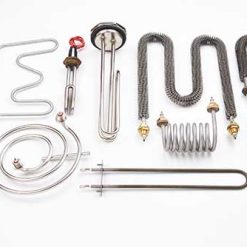


We offer a comprehensive selection of heaters, including band/strip heaters, cartridge heaters, silicone heaters, and tubular heaters.
Strip heaters are versatile heating elements commonly used for surface heating in various applications, such as heating tanks, hoppers, molds, and plates. They are also used in ovens, drying cabinets, and incubators, where direct heating is required. Their design allows for efficient heat transfer to flat surfaces, making them suitable for applications in industrial settings, […]
A silicone heater is a flexible heating element made from silicone rubber, capable of providing uniform heat distribution over a wide surface area. They are highly flexible and can be manufactured in various shapes, sizes, and wattages to fit specific applications. Silicone heaters are commonly used for applications requiring gentle heating, such as warming oil […]
Silicone heaters can typically operate at temperatures up to 220°C (428°F).
Our band/strip heaters are capable of reaching sheath temperatures up to 650°C with a stainless steel sheath, making them suitable for applications requiring high-temperature heating.
Absolutely, we provide custom heaters in silicone to fit unique requirements. They can be tailored for various shapes, sizes, and heating capacities, with options for integrated temperature sensors or thermostats for precise control.
Cartridge heaters are commonly used in applications requiring concentrated heat, such as mold heating, packaging machines, and heating of liquids. Their compact design allows them to fit into small spaces, providing uniform heat distribution.
Yes, our tubular heaters are versatile and can be efficiently used in both air and liquid mediums. Their flexibility and range of sheath materials make them ideal for a wide variety of applications.
To determine the correct size, you’ll need to know the internal diameter (ID) of the heater when fully clamped, the height of the heater, supply voltage, wattage, or amperage, and the type of termination. This information ensures a perfect fit and optimal performance.
When choosing a heater, consider the application environment, required temperature range, space limitations, power requirements, and whether the heater needs to conform to specific shapes or sizes. Additionally, consider if you require any custom features, such as integrated temperature control. If you need help deciding, don’t hesitate to contact us!