

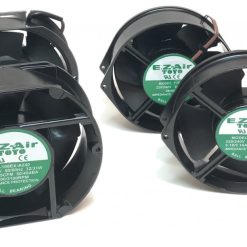





Our fans are constructed from high-quality materials for durability and performance. This includes die-cast aluminium frames for mini blowers and full-metal designs for our industrial stand and industrial wall fans.
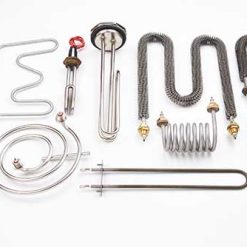
When choosing a heater, consider the application environment, required temperature range, space limitations, power requirements, and whether the heater needs to conform to specific shapes or sizes. Additionally, consider if you require any custom features, such as integrated temperature control. If you need help deciding, don’t hesitate to contact us!
Noise level is an important consideration. Each fan’s product page lists the decibel (dB) level to help you assess its sound output. For environments where noise is a concern, our mini blowers are designed to operate quietly without sacrificing airflow efficiency.
An industrial fan is designed for heavy-duty applications, offering higher durability, greater airflow, and the ability to handle harsh environments, such as factories or warehouses. They typically have larger blades, more powerful motors, and robust constructions. Regular fans, on the other hand, are intended for residential or light commercial use, focusing on comfort with lower […]
While an industrial fan or an industrial wall fan are primarily designed for commercial or industrial applications, they can be used in residential settings where high airflow is desired, such as workshops, garages, or large living spaces. However, it’s important to consider factors like noise levels, size, and power requirements, as these fans are generally […]
An industrial fan in Singapore is definitely worth the investment for applications requiring extensive air circulation, cooling, or ventilation in large or challenging environments. Their durability and high-performance capabilities make them suitable for commercial, industrial, or agricultural settings, providing effective air management solutions.
A PID (Proportional, Integral, Derivative) controller is a control loop mechanism that continuously calculates an error value as the difference between a desired setpoint and a measured process variable. It applies a correction based on proportional, integral, and derivative terms to minimise the error and stabilise the process. A PLC (Programmable Logic Controller) is an […]
The three main components of a PID (Proportional, Integral, Derivative) controller are: Proportional (P) component: Adjusts the output proportionally to the error, where the error is the difference between the setpoint and the process variable. It addresses the current error. Integral (I) component: Accumulates past errors and integrates them over time to eliminate residual steady-state […]
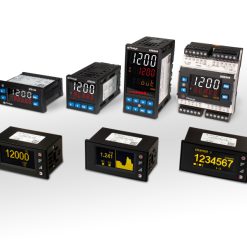
We offer a diverse range of controllers, including slim digital multi-function timers, high-performance LCD temperature controllers from Hanyoung Nux VX and Pixsys, and the state-of-the-art Shinko BCx2 series PID temperature controller.
Yes, the temperature controllers are designed for easy setup and maintenance with a simple five-key interface, and some models also support programming via NFC with dedicated apps for even more convenience.